
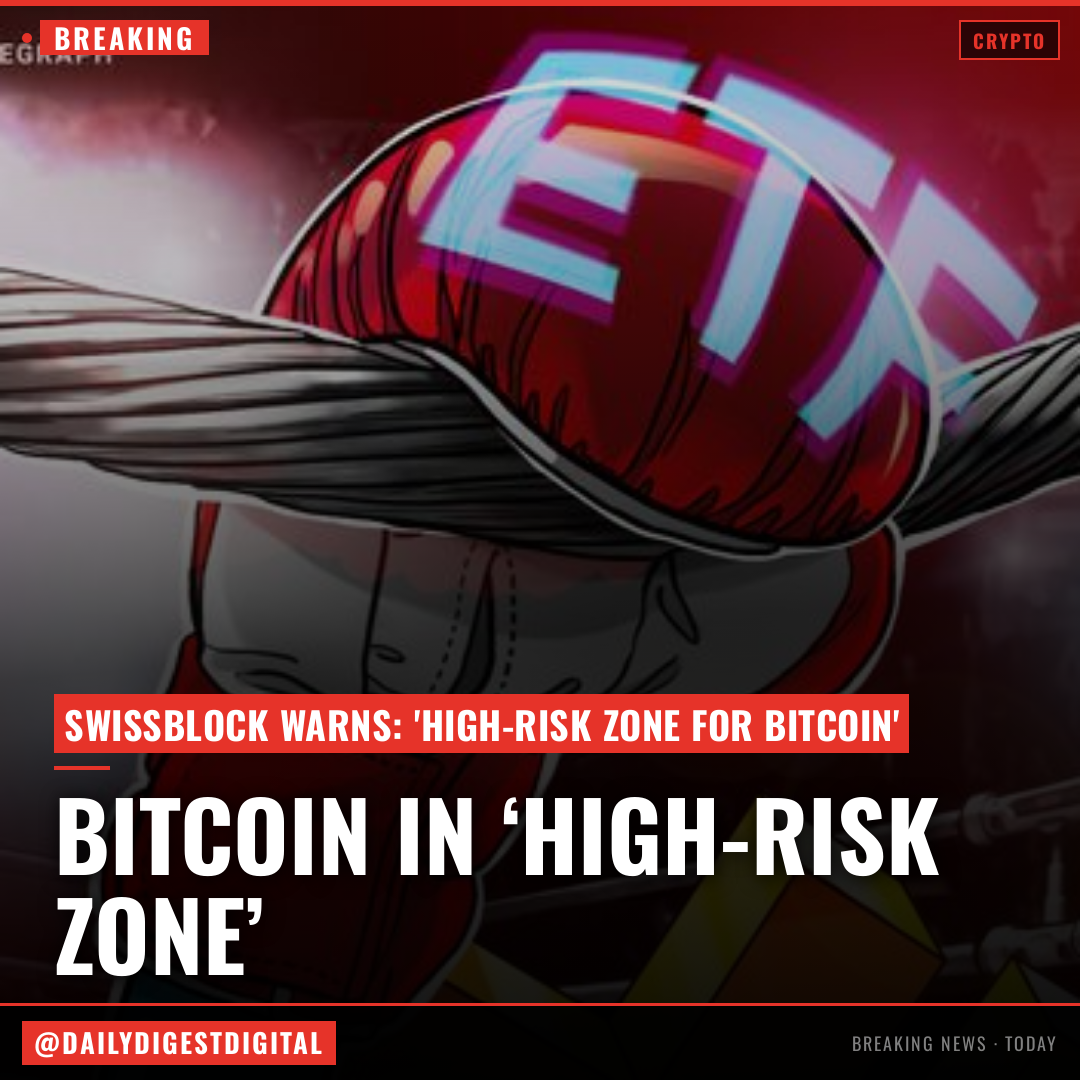
Bitcoin Slides into High-Risk Zone as ETF Outflows Signal Institutional Exit: Swissblock
Swissblock, a prominent blockchain research firm, has issued a stark warning that Bitcoin is now in a 'high-risk zone' as evidence of significant institutional withdrawal surfaces. This comes in the form of steady outflows from exchange-traded funds (ETFs), marking a worrying trend for the cryptocurrency market.
Technical Implications and Market Dynamics
According to Swissblock, the outflows from ETFs are contributing to an increase in supply without a corresponding offset in demand. This dynamic is critical as it directly impacts the market's liquidity and price stability. ETFs, often seen as a gateway for institutional investors to enter the crypto market, are now showing signs of institutional divestment, potentially signaling broader market sentiment.
The data from Swissblock suggests a concerning shift in investor behavior. Over the past quarter, ETF outflows have seen a consistent decline, indicating a sustained loss of institutional interest. This is particularly noteworthy as institutional participation has been a key driver of Bitcoin's growth over the past few years.
Industry Impact and Investor Sentiment
The implications of this trend are far-reaching. For one, the reduced demand from institutions could lead to a decrease in overall market liquidity, making it harder for both retail and institutional investors to enter or exit the market. This could exacerbate price volatility, especially in the face of macroeconomic uncertainties.
Furthermore, Swissblock's analysis points to a potential correction in the market. The firm warns that the current trend could be the start of a broader downturn, especially as institutional players, who traditionally drive price stability, are now pulling out of the market.
Technical Analysis and Market Sentiment
Bitcoin's recent price action supports the concerns raised by Swissblock. The cryptocurrency has seen a steady decline, with analysts pointing to a growing bearish sentiment among key market participants. The technical indicators, such as the Relative Strength Index (RSI) and Moving Averages, suggest that the market is in a downward trend, with no clear signs of a reversal in sight.
Moreover, the trend of ETF outflows is indicative of a broader market correction. The withdrawal of institutional capital could be a precursor to a wider market downturn, as these investors often act as stabilizers in times of market stress. Their exit could lead to a cascading effect, where retail investors, who are often more volatile in their trading behavior, may follow suit.
Conclusion and Future Outlook
As the market continues to grapple with this high-risk environment, the focus remains on the underlying factors driving these changes. While the exact triggers of the current trend are unclear, the warning from Swissblock underscores the importance of continued monitoring of institutional participation in the crypto market. For investors, this signals the need to be more cautious and to consider alternative investment strategies as the market conditions evolve.
Going forward, the key will be to watch for signs of institutional re-entry or new investment opportunities. As the market continues to evolve, staying informed and agile will be crucial for navigating the challenges ahead.